Museums of Confrontation in Turkey and Never-Confronted Diyarbakır Prison

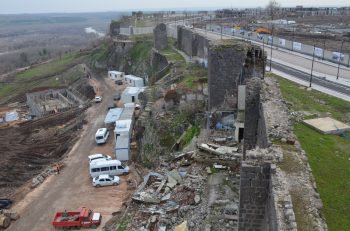
Diyarbakır Prison is among the “ten most notorious jails in the world.” After the September 12, 1980 Turkish coup d’état, the facility was transferred to military administration and became a center for inhumane tortures. Many CSOs, human rights activists and lawyers took steps to turn the prison into a human rights museum. Research commissions were […]
Diyarbakır Prison is among the “ten most notorious jails in the world.” After the September 12, 1980 Turkish coup d’état, the facility was transferred to military administration and became a center for inhumane tortures. Many CSOs, human rights activists and lawyers took steps to turn the prison into a human rights museum. Research commissions were established with the Parliament and the Municipality of Diyarbakır. Government officers promised to support the attemot. However, the attempts started in 2007 are at a dead end.
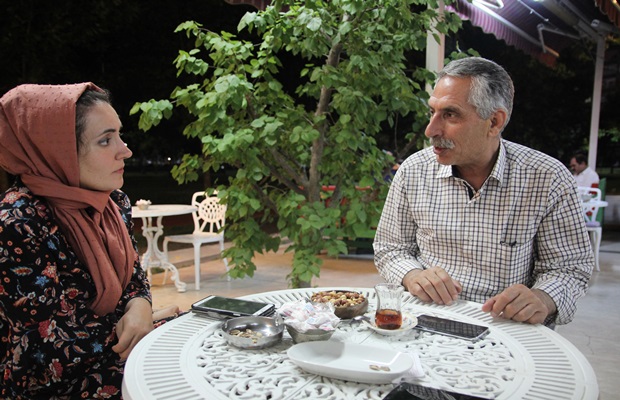
We interviewed Gani Alkan, who is a member of 78ers Association and a former prisoner in Diyarbakır Prison.
Why the attempts to turn Diyarbakır Prison into a museum are more important than other places of memory?
Our works ground on four things: First is to uncover everything happened in Diyarbakır Prison. Second is to face it and convict the responsible. Third is to reveal the aim and causes of systematic torture in Diyarbakır Prison, to shade a light on why it was the cruelest in Diyarbakır Prison. Last is to establish a museum of memory.
Politicians once said they would help making Diyarbakır Prison turn into a museum. Were no steps taken till then?
Many politicians spoke about it. Once said now forgotten. Our association is not closed but due to the state of emergency, we cannot work freely on Diyarbakır Prison. People don’t want to talk about it also.
Do you have an action plan? What kind of museum do you think it should be?
We established four commissions. The first consists of lawyers, second of archeologists, third architectures and the last one consists of experts who focus on socio-psychology. There are documentary and film-makers, writers and poets in it. Our only criterion is to keep the prison close to its own soul.




Bizi Takip Edin